With Data, We Show Belonging Grows
The lab is the experience. The measure is what turns it into evidence a principal can put in a plan. Five streams, one report, one page.
A Grade 5 Class, Week 1 And Week 4 SAMPLE
See The Numbers As A Table
| Item | Week 1 agreeing | Week 4 agreeing | n |
|---|---|---|---|
| I feel like I belong at my school. | 38% | 62% | 24 |
| An adult at school notices when I am not there. | 46% | 71% | 24 |
| Students in my class help each other. | 50% | 75% | 24 |
| I get to help with things that matter in my class. | 58% | 83% | 24 |
| I took care of something this week. | 21% | 54% | 24 |
Five Evidence Streams, One Report
Check-In
Five private items on belonging and connectedness, week 1 and week 4. Plus a wellness item and the program’s own questions.
Plant Data
Height in centimeters per tray in weeks 2, 3 and 4. The class line plot is the science artifact.
Attendance Snapshot
The four lab weeks beside the four weeks before, entered from the school’s own system. A count, never a promised effect.
Family Count
Harvest Night sign-ins at the door, with home language.
Student Voice
“What did you take care of?” in week 1 and week 4, with phrases marked for belonging, care and responsibility.
The Grow Lab Check-In
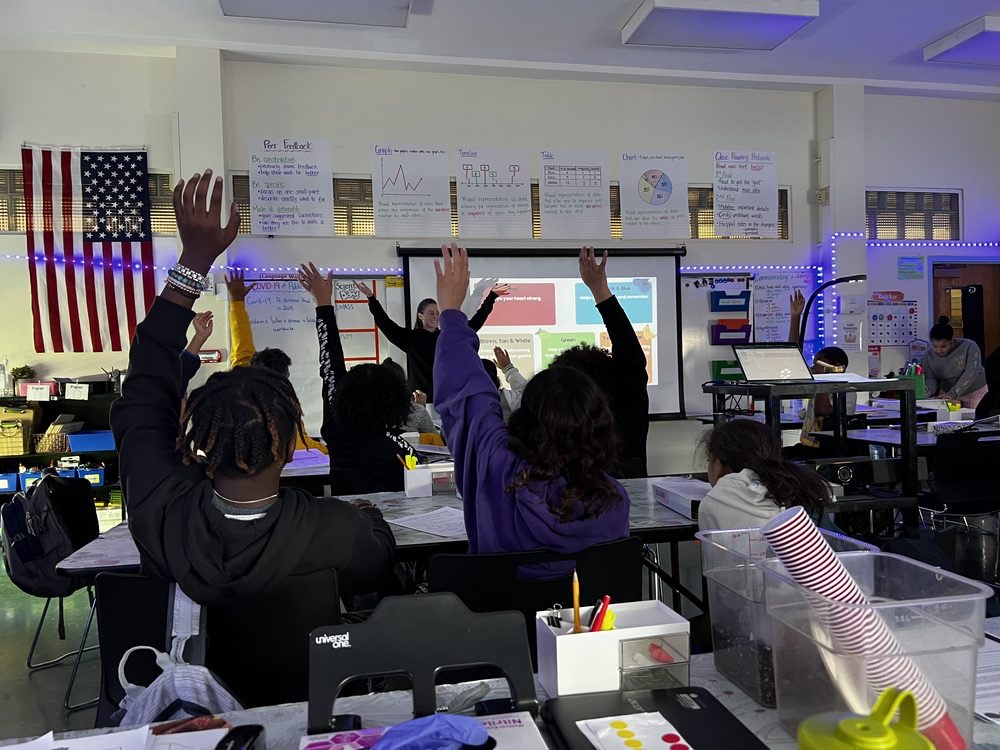
Taken privately, on a device or on paper, in week 1 before planting and in week 4 before harvest. Same items both times. About three minutes. Never by raised hands.
The Seed-To-Bloom Scale
The top two steps count as agreement, the way VOCAL counts its top two. VOCAL items are shown as the closest item, never as equivalent.
The Program’s Own Questions
Boston Youth Farm Project’s own program questions sit beside the Check-In, answered privately on a device or on paper.
Week 1
- Have you ever grown your own food before?
- Do you know where most of your food comes from before it reaches your plate?
- When you eat, do you think about what's in your food and what it does for your body?
- Do you feel connected to nature?
Week 4 adds
- Would you want to grow your own food again after this?
- Has this program changed the way you think about food?
The Protocol
| Who Reads It | The classroom teacher reads each item aloud. Students answer on a device or on the paper form. |
| When | Week 1 before planting, and week 4 before harvest. Same items both times. |
| How Long | About three minutes. One item at a time. |
| Private Answers | Never by raised hands. Students answer where classmates cannot see. |
| No Names On Paper | Paper forms carry a class number, not a name. The teacher keeps the number list. |
| What Is Collected | Six answers on the seed-to-bloom scale, BYFP’s program questions, the week, the class. |
| What Is Never Collected | Names on forms, recordings, home addresses, anything about health or family. |
| Opting Out | Families can opt a student out with the consent form, or by telling the teacher. A student can skip any item. |
Survey rules for schools, including federal notice and student records, are on the compliance page.
Take It Yourself
Answer the five items as if you were a student, and your answer appears as a gold marker on each class bar.
The Class Before Harvest, With You SAMPLE
Bars: share of the class agreeing on each item in week 4. Your answer shows as a gold marker.
What The Measure Shows, And What It Doesn’t
A belonging Check-In before and after shows how one class changed over four weeks. It is an honest local signal, not proof the lab caused the change, and not a VOCAL score.
No study ties school gardens directly to attendance. Belonging is linked to lower absence, and CDC names school gardening as one way to build connectedness. So attendance is something we count beside the lab, never something we promise.