A Tier 1 Belonging Routine, With One Roll-Up For Every School.
Elementary students keep a grow lab alive together for four weeks, then harvest it with their families. Every school runs the same private Check-In, and your office gets one roll-up for your plan and your wellness committee.
Watch The 2-Minute Intro
Oliver walks you through what a classroom grow lab brings to your students.
What Your Plans Already Ask For,And What A Partnership Delivers
The state MTSS Blueprint names school belonging and health and wellness among its domains. Each partnership ends with a packet your office can lift into plans and reports.
| What You Are Judged On | What The Lab Does | What You Get |
|---|---|---|
| Student Opportunity Act plan Evidence-based programs, outcome metrics | A Tier 1 engagement routine with a before and after measure in every participating school. | Outcome table by school |
| Chronic absenteeism State accountability indicator | Statewide chronic absence was 17.1% in 2025-26, down from 22.2% in 2022-23. Each school enters lab-week attendance beside the four weeks before. A count, not a promised effect. | Attendance snapshot per school |
| Engagement and belonging VOCAL | Five items, each shown beside its closest VOCAL item, so the roll-up reads in the same language. | Belonging, week 1 and week 4 |
| Local wellness policy Triennial assessment, federal rule | Nutrition education, tasting and family events, documented school by school. | Wellness evidence per school |
| MTSS The Massachusetts Blueprint | A universal routine every student joins, with named care jobs that give each student an adult who notices. | Care roster and check-ins |
The Measure, In Five Items
Taken privately in week 1 and week 4. Same items both times. Each sits beside its closest VOCAL item, so nothing needs translating.
A Grade 5 Class, Week 1 To Week 4 SAMPLE
“If we can get to people at a young age, when they are so open to learning new concepts, it can have a big ripple effect on their lives.”
Oliver Homberg to Northeastern Global News, June 2, 2023
Everything A Classroom Needs, In One Box
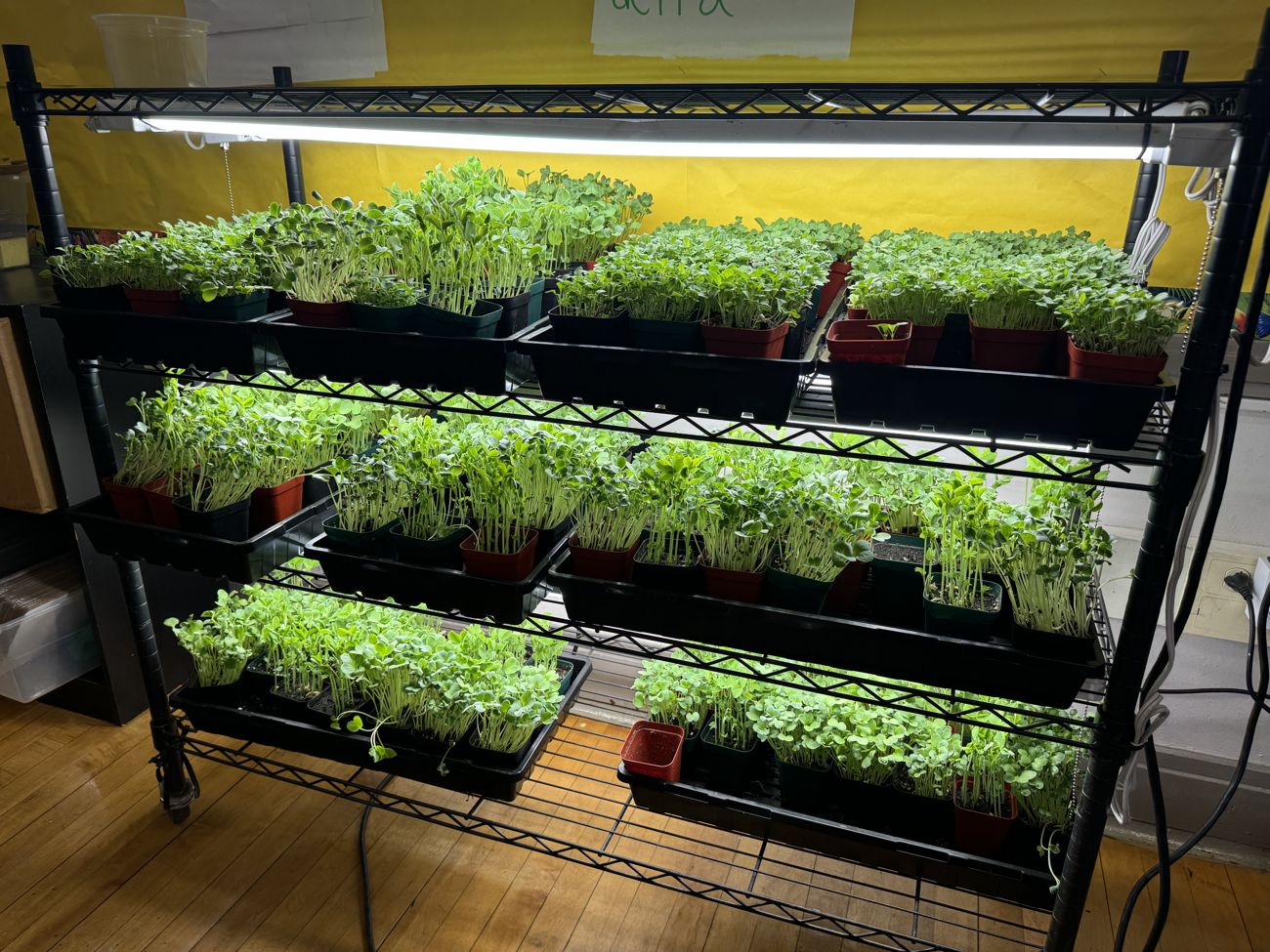
- The grow lab: rack, grow lights, trays and timer
- Seeds and growing medium for up to 84 students
- Simple setup: delivered to your door with a step-by-step guide and video
- A standards-aligned curriculum: free and ready on our site
- A real person to call or email when you have a question
Four Weeks, Seed To Harvest
It All Starts With A Seed
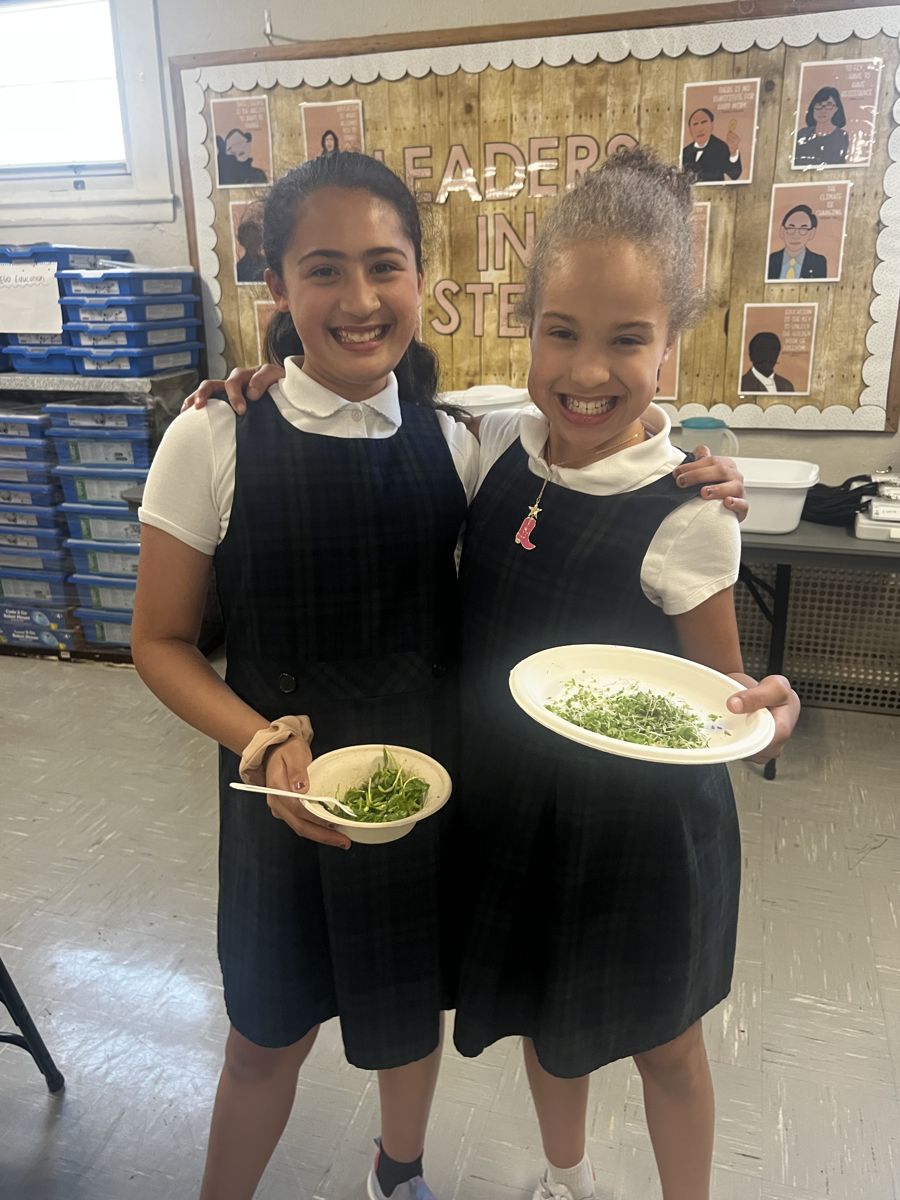
Students plant kale, label a seed, and take the Check-In before the first seed goes in.
Where Does Food Come From?
Seeds come up. Students plant arugula, trace food back to the farm, and take the first height measurement.
Food Is Fuel
Radish goes in. Students measure again and explore why we eat and what food does for the body.
Harvest Day
Everything is cut and tasted together. The Check-In again, then Harvest Night with families.
What Is Included
| Included | Classroom Pilot | Site License | District Partnership |
|---|---|---|---|
| Grow lab rack, lights, trays, timer | |||
| Seeds and soil for up to 84 students per rack | |||
| Harvest and taste kit | |||
| 48 lessons, teacher guides, student pages | |||
| The Check-In, week 1 and week 4 | |||
| One-page evidence brief | |||
| Harvest Night kit, English and Spanish | |||
| Attendance snapshot, school-wide | · | ||
| Setup and check-in visits | · | ||
| School Site Council brief | · | ||
| District roll-up and school committee slide | · | · | |
| Food service salad bar count | · | · |
Three Ways In
Each one keeps the Check-In and the brief, so the evidence builds as you add schools.
Classroom Pilot
Four weeks in your building to see it work before a whole school commits.
- A grow lab per classroom, seeds and soil
- The Check-In, week 1 and week 4
- Harvest Night kit
- A one-page evidence brief
Site License
The whole building grows at once, with one Harvest Night for every family.
- Labs for every participating classroom
- School-wide Check-In and attendance snapshot
- Harvest Night for every family
- A brief for your School Site Council
- Setup and check-in visits
District Partnership
One Check-In across schools and one roll-up for your school committee and wellness committee.
- Everything in a Site License, per school
- District roll-up by school and grade
- Alignment to your SOA plan and wellness policy
- A school committee slide
- Food service salad bar count
Funding That Already Fits
District partnerships usually braid two or three of these. We help your grants office write each one.
Student Opportunity Act
An evidence-based program with outcome measures fits the plan structure districts already file.
Title IV-A
Safe and healthy students and well-rounded education are both allowable uses.
USDA Farm To School
Federal grants for school gardens and nutrition education, often led by food service.
Title I Family Engagement
Harvest Night documents family participation at every school.
In Their Words

My favorite part was planting and then eating it.
A student on harvest day, Boston Youth Farm Project classroom.

I would do it again for the food.
A student on harvest day, Boston Youth Farm Project classroom.
Since 2022, In Boston Classrooms
Tap a number to see how it was counted.

Teachers Who’ve Run It
Snowden International School, BPS
Thomas A. Edison K-8 School, BPS
They now have knowledge of how food is grown, transported and all the resources needed to produce a single dinner.
Most of all, they loved to eat the microgreens. I wish we had more of these experiences for more students.
Oliver and his team bring real urban-farming expertise to our faculty and students, growing produce from seed right in our STEM classroom.
There is nothing like getting your hands dirty, nurturing a young plant, and then getting to eat it.
Ready To Start?
Bring the grow lab to a cohort of schools, with one Check-In and one roll-up for your office.