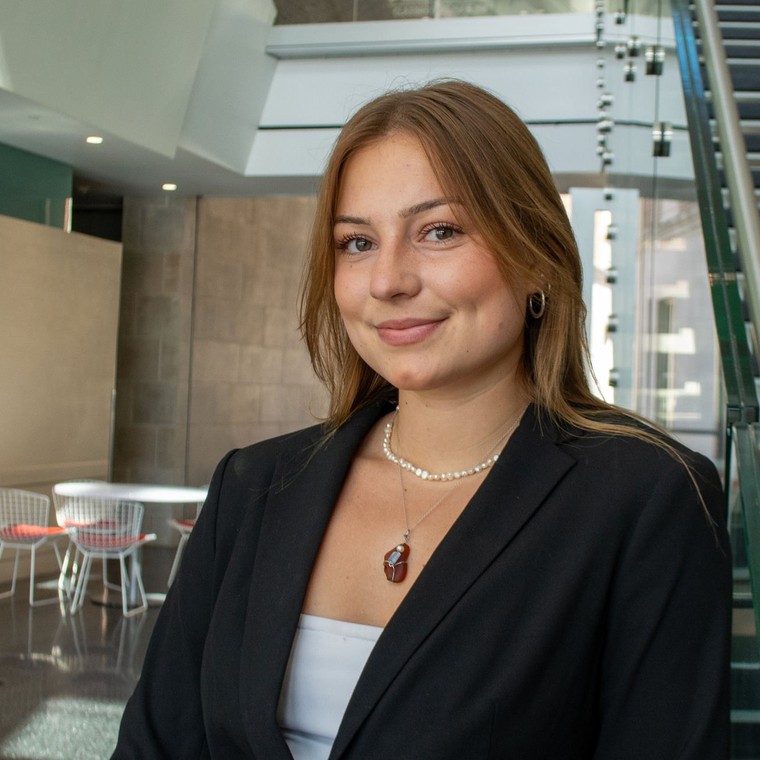
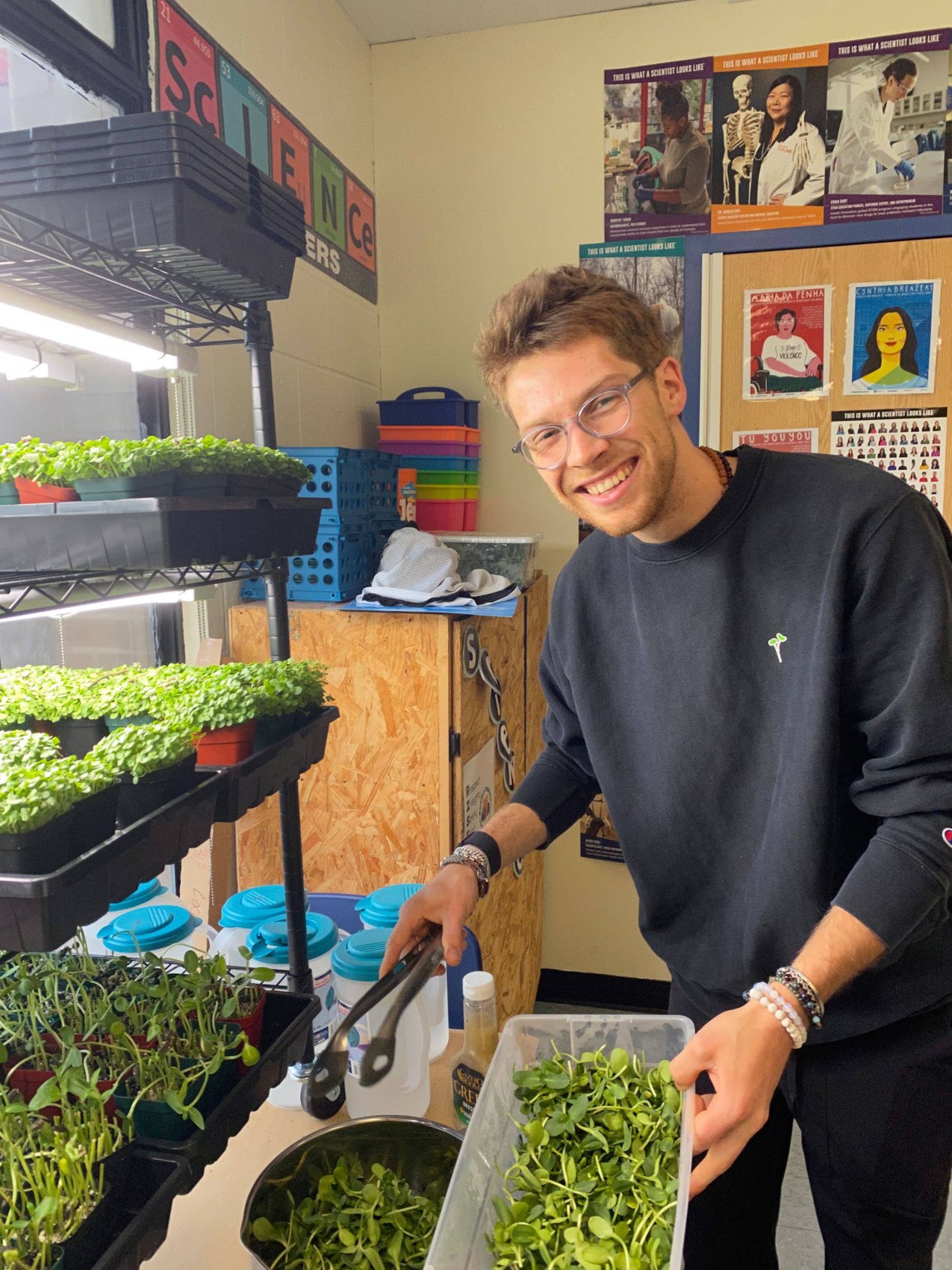
When I was a kid, maybe 8 or 10, I'd go out into my grandmother's back yard at her home in Germany to pick berries. Visiting grandma was always such a delight, and in large part she had those berries to thank. There was something about picking something fresh, about handling the plant itself, that resonated with me deeply and first instilled a love of plants and real food. Lo and behold, almost 20 years later I'm running a vertical farming business, that early love of greens having grown into a lifelong relationship with gardening and good food. Boston Microgreens has operated out of South Boston for 9 years and counting, growing the finest microgreens and edible flowers money can buy for chefs and households across the city.
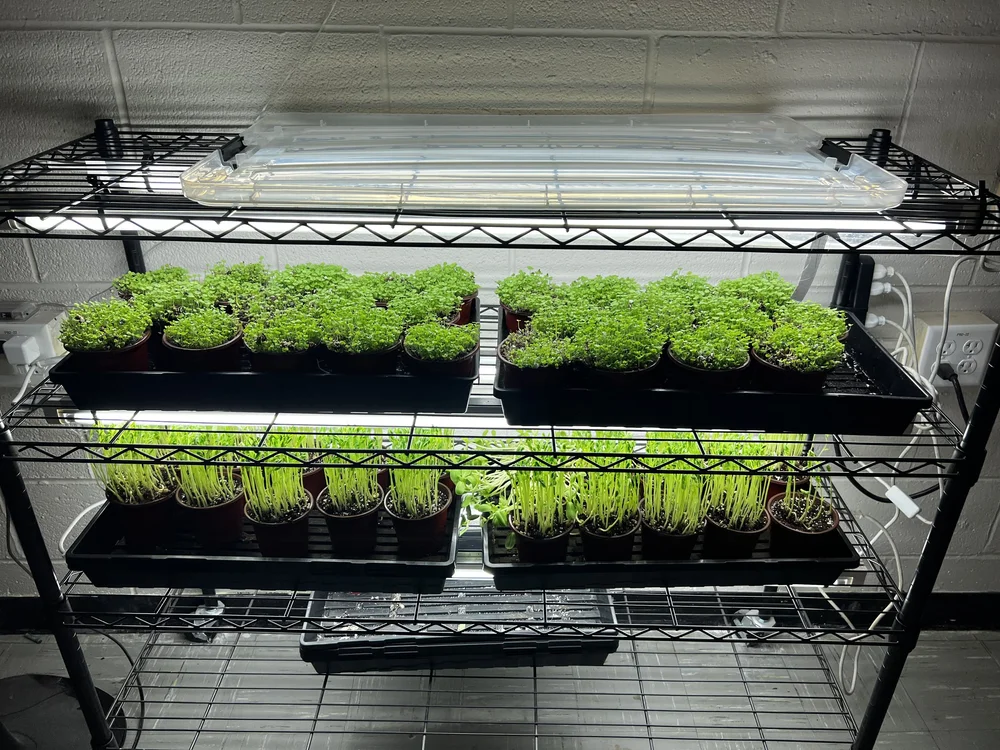
One day, thinking about my grandma Hilde, it occurred to me: why not shrink these racks down and give students the chance to grow something right in their own classroom? School gardens are a ton of work, and it's winter through most of the school year anyway. I'm not trying to turn anyone into a farmer, but who knows what working with living plants might unlock in a kid? One might be nudged to eat more vegetables, another might just want to spend more time under a tree, and another might get hooked on the STEM behind the grow rack. Let's see if this can work.
We ran our first pilot at the Dever School in 2022, then began expanding to other schools in the district. Now we're putting grow labs directly into the hands of teachers across Massachusetts.
OliverFounder & Director
Long before there were classrooms, people learned by growing food together. It’s one of the oldest and most human things we do, and for a lot of kids today it has gone missing. Food shows up in a package; where it came from is a mystery.
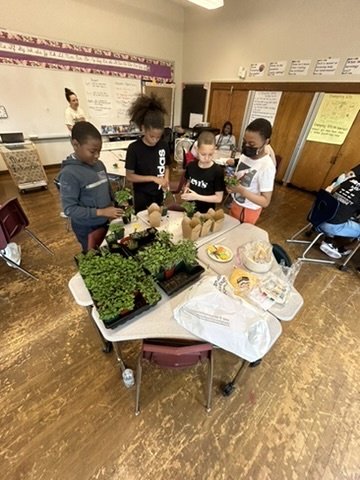
A grow lab puts a little of that back. When a student plants a seed, checks on it each morning, and finally eats what they grew, something shifts. They’re not memorizing a food chain, they’re part of one. The distance between them and their food gets smaller.
And it rarely happens alone. A class plants together, tends together, and shares the harvest at the table. There’s a calm in caring for something alive, and a quiet pride in feeding the people around you. That’s the part that never shows up on a standards chart, and it may be the part that matters most.
We’re not only teaching plant science. We’re handing students back a connection to the earth, to their food, and to each other.
A few milestones on the way here.
Students build real confidence by growing something themselves, and carry that forward.
A tray of microgreens on a desk is a surprisingly good place to start the conversation about where food comes from.
Students who grow food eat it. We've watched vegetable-avoiders go back for thirds of something they planted.
Boston Youth Farm Project is a registered 501(c)(3) nonprofit. Schools that can fund a grow lab, do, and that's what allows sponsors and grants to cover the classrooms that can't. We keep overhead low so that as much as possible reaches students. EIN: 92-2503299
We work alongside Boston Microgreens, one of the city's largest indoor farms, in South Boston. Classrooms in the area can visit to see the same growing process at commercial scale.
Visit microgreens.boston →